
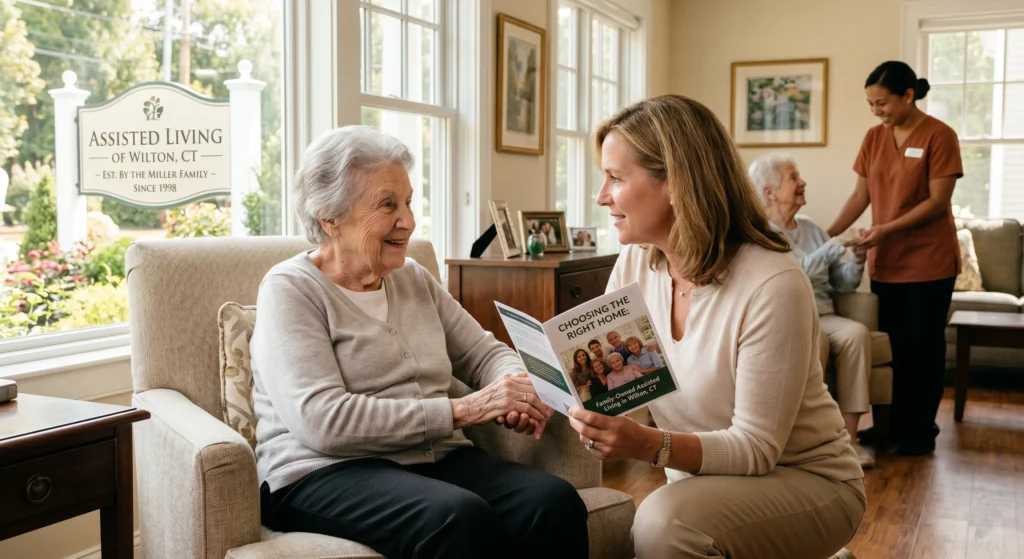
When families begin the search for assisted living, the focus often starts with location, cost, and amenities. However, one of the most important and frequently overlooked factors is ownership. Whether a community is family-owned or part of a large corporate network can significantly influence the quality of care, staff relationships, and overall resident experience.
For those researching family-owned assisted living Connecticut options or narrowing their search to Wilton CT assisted living family-owned communities, understanding this distinction can make the decision process clearer and more confident. Ownership is not just a business detail. It shapes the philosophy of care, the daily environment, and the level of trust families can expect.
This guide explores the key differences between family-owned and corporate assisted living communities and why those differences matter when choosing the right home for your loved one.
What is the Difference Between Family-Owned and Corporate Assisted Living?
At a high level, the difference comes down to who makes decisions and why.
Family-owned assisted living communities are typically founded and operated by individuals or families who remain actively involved in daily operations. Their priorities are often centered around relationships, long-term reputation, and community values.
Corporate assisted living communities are owned and managed by larger organizations or investment groups. Decisions are usually made at a regional or national level, with standardized systems across multiple locations.
While both models can provide quality care, the structure behind them often leads to very different experiences for residents and their families.
Why Ownership Structure Matters More than You Think?
It is easy to focus on visible features such as room layouts, dining menus, or activity calendars. However, ownership affects the less visible aspects that ultimately define the quality of life. These typically include:
- Staff consistency and morale
- Responsiveness to individual needs
- Flexibility in care planning
- Community culture and atmosphere
- Long-term trust and stability
These underlying factors often have a greater impact on daily life than surface-level amenities.
The Human Touch: Personalized Care in Family-Owned Communities
One of the most meaningful advantages of a family-owned assisted living community is the emphasis on personalized care. In these environments, leadership is often present and directly engaged with residents, families, and staff. This creates a culture where:
- Residents are known personally, not just by room number
- Care plans are tailored and adaptable
- Families can communicate directly with decision-makers
- Concerns are addressed quickly and thoughtfully
Instead of navigating multiple layers of management, families experience a more direct and responsive approach to care. This level of connection builds trust and ensures that each resident is treated as an individual with unique needs and preferences.
Staff Longevity and Relationships: A Key Differentiator
Staff consistency is one of the strongest indicators of quality in assisted living. High turnover can disrupt care, reduce trust, and negatively affect resident well-being. Family-owned communities often prioritize employee satisfaction and workplace culture, which leads to stronger retention.
Staff tend to stay longer in family-owned communities because the environment is more supportive and relationship-focused. With leadership that is accessible and supportive, employees feel valued and recognized, creating a workplace culture that emphasizes respect and collaboration. Thus, decision-making takes into account both resident and staff needs.
Long-tenured staff members develop meaningful relationships with residents. They are more likely to notice subtle changes in health or behavior, allowing for early intervention and improved outcomes.
On the other hand, corporate communities, while capable of providing quality care, may experience higher turnover due to standardized policies or operational pressures.
Flexibility vs. Standardization in Care
Corporate assisted living communities often rely on standardized systems to maintain consistency across locations. While efficient, this approach can limit flexibility. Meanwhile, family-owned communities tend to offer a more adaptable approach to care.
Flexibility is one of the defining strengths of family-owned assisted living communities, allowing care to be adapted to each resident’s personal preferences and changing needs. Instead of relying on rigid routines or standardized policies, these communities prioritize individual comfort and dignity.
This approach ensures that daily life feels more natural, responsive, and resident-focused. The flexibility in family-owned settings can look like:
- Adjusting meal preferences and dining schedules
- Personalizing daily routines
- Accommodating evolving health needs
- Creating individualized activities
This flexibility becomes increasingly important as residents age and their needs change over time. Rather than fitting residents into a fixed system, family-owned communities shape care around each individual.
Leadership Philosophy: Mission vs. Margin
A key difference between family-owned and corporate assisted living lies in leadership priorities. Family-owned assisted living communities are typically built around a strong sense of purpose and personal commitment, often shaped by the values of the founding family.
They tend to emphasize close relationships, continuity of care, and a deep connection to the residents they serve. Since leadership is usually more directly involved in daily operations, these communities often maintain a consistent and people-centered approach to care over time.
Family-owned communities are guided by a founding vision and focused on long-term relationships and trust. Thus, all decisions prioritize resident well-being, and success is measured by satisfaction and reputation.
On the contrary, corporate assisted living communities are usually part of larger organizations that operate multiple locations under a unified structure. Their approach often focuses on consistency, efficiency, and scalability across all facilities.
Decision-making is typically guided by broader organizational policies, which helps standardize services but can also make the experience feel more system-driven rather than individually tailored.
Corporate communities are driven by financial performance and growth goals. All decisions are influenced by investors or shareholders. The board’s emphasis remains on efficiency and scalability, which leads to success being measured by occupancy and margins.
This distinction does not mean corporate communities lack compassion. However, their structure can introduce competing priorities that affect decision-making.
The Role of Founding Vision
The founding vision plays a significant role in shaping the identity and values of many family-owned assisted living communities. It often serves as the guiding force behind how care is delivered and how residents are supported on a daily basis.
Over time, this vision becomes deeply embedded in the culture of the community, influencing both leadership decisions and the overall approach to care. A founder like Fred Rzepka established a care model rooted in:
- Respect for each resident as an individual
- Commitment to compassionate and high-quality care
- Strong ties to the local community
- Long-term relationships with families
This type of vision becomes embedded in the culture, shaping everything from hiring practices to daily interactions. Unlike corporate environments that may shift with leadership changes, family-owned communities often maintain a consistent identity.
Community Integration and Local Partnerships
Family-owned assisted living communities are often deeply connected to their local area. They build meaningful partnerships with healthcare providers and community organizations to enhance resident care.
Collaborations with trusted systems such as Nuvance Health can provide:
- Coordinated and comprehensive medical care
- Access to local specialists
- Better communication between caregivers and providers
- Improved continuity of care
These partnerships reflect a commitment to integrating residents into the broader community. Corporate communities may also establish partnerships, but they are often standardized rather than locally tailored.
Decision-Making Speed and Accountability
Decision-making plays a crucial role in the quality of care and overall resident experience in assisted living communities. When issues or concerns arise, the ability to respond quickly and effectively can make a meaningful difference in outcomes.
Family-owned communities typically offer faster decision-making because leadership is directly accessible, fewer approval layers are involved, and accountability is clear and immediate. Families can often speak directly with someone who has the authority to resolve issues.
In corporate environments, however, decisions may require multiple levels of approval, which can delay action. This difference can have a meaningful impact on both resident experience and family confidence.
Culture and Atmosphere: The Feeling You Cannot Measure
The culture and atmosphere of an assisted living community often shape how comfortable and at ease residents and families feel during their experience. While services and facilities are important, the overall environment and sense of connection can be just as meaningful.
Many families notice an immediate difference in warmth, interaction, and overall feeling when they visit different types of communities. Family-owned environments often provide a home-like atmosphere with consistent faces and interactions. It creates genuine relationships between staff and residents, ensuring a sense of comfort and belonging.
While corporate communities may offer modern facilities and extensive amenities, they can sometimes feel more structured or institutional. The emotional experience plays a significant role in long-term satisfaction, which is missing in corporate-assisted living communities.
Transparency and Trust
Transparency and trust are fundamental when families are making decisions about assisted living for a loved one. Clear communication and openness help reduce uncertainty and build confidence in the care being provided.
Family-owned communities often build trust through open and honest communication. It includes clear discussions about care needs, and transparent pricing and policies. Consistent leadership presence also plays a crucial role.
Since their reputation is closely tied to their name, there is a strong commitment to accountability. Meanwhile, corporate organizations may also value transparency, but their size can sometimes create distance between families and leadership.
Cost Considerations: Value vs. Price
Cost is an important consideration when choosing an assisted living community, but it should always be evaluated in terms of overall value rather than price alone. Families benefit most when they look beyond monthly fees to understand the quality of care, consistency of service, and long-term benefits provided.
In many cases, the true value is reflected in the daily experience and level of support residents receive. Family-owned communities often provide:
- Greater staff consistency
- More personalized care
- Increased flexibility
- Stronger relationships
These benefits can lead to better long-term outcomes and fewer disruptions. Corporate communities also offer competitive pricing or incentives, but families should consider whether those savings align with their priorities.
When a Corporate Community Might Be the Right Fit?
Corporate assisted living communities can be a suitable choice for families depending on their specific needs, preferences, and expectations. These communities often operate with structured systems and standardized services designed to provide consistency across multiple locations.
For some families, this level of organization and scale can be particularly beneficial when considering long-term care options. They may offer:
- Larger campuses with extensive amenities
- Access to broader networks
- Standardized processes
- Specialized programs across locations
For some families, these features are appealing and align with their expectations. The key is understanding the trade-offs and making an informed choice that is most suitable for your loved ones.
How to Evaluate Your Options?
When comparing assisted living communities, asking the right questions can reveal important differences. Some key aspects you must consider when evaluating your options include the following details.
About Staff
Understanding the staff experience is essential when evaluating an assisted living community, as it directly impacts the quality and consistency of care residents receive. Learning about caregiver stability, training, and workplace support can reveal how well a community supports its employees and residents.
To evaluate the staff, you can ask:
- How long have caregivers been employed here?
- What is the staff turnover rate?
- How are staff supported and trained?
About Leadership
Leadership accessibility and involvement play a major role in how effectively a community responds to resident and family needs. Knowing how decisions are made and how easily families can connect with leadership helps indicate the level of accountability and responsiveness you can expect.
In order to evaluate leadership effectively, review the following:
- Is leadership regularly on-site?
- Can families communicate directly with decision-makers?
- How are concerns addressed?
About Care
The approach to care defines how well a community can meet each resident’s individual needs over time. Exploring how care plans are developed, adjusted, and personalized provides insight into the flexibility and attentiveness of the support provided.
When evaluating care, it is important to look at:
- How are care plans created and updated?
- How flexible are daily routines?
- How are personal preferences accommodated?
About Community
The broader community environment and external connections contribute significantly to residents’ overall well-being and engagement. Understanding local partnerships, activities, and the general atmosphere helps families assess how enriching and connected daily life will feel.
In order to evaluate the community setting, review the following:
- What local partnerships exist?
- How are residents engaged with the community?
- What is the overall atmosphere?
These insights can help families move beyond surface impressions and make an informed decision.
Why Family-Owned Assisted Living in Connecticut Stands Out?
For those exploring family-owned assisted living Connecticut, communities in areas like Wilton offer a distinct advantage. Wilton CT assisted living family-owned communities often reflect strong local roots with consistent and accessible leadership.
This ensures the existence of meaningful healthcare partnerships and a focus on long-term relationships. These qualities contribute to a more personalized and supportive environment for residents.
Choosing What Truly Matters
The decision between family-owned and corporate assisted living goes beyond ownership structure. It is about values, priorities, and the kind of care experience you want for your loved one. Choosing the right environment means identifying what matters most to your family and your loved one.
If you are researching family-owned assisted living Connecticut or considering a Wilton CT assisted living family-owned option, take the time to visit communities that prioritize relationships, consistency, and local connection.
Explore the services offered at The Greens at Cannondale to learn how a family-owned approach can provide the care, comfort, and confidence your loved one deserves.
Frequently Asked Questions
What is the main benefit of family-owned assisted living?
Family-owned communities often provide more personalized care, stronger relationships, and greater flexibility in meeting individual needs.
Are corporate-assisted living communities lower quality?
Not necessarily. Many provide excellent care, but their structure may limit flexibility compared to family-owned environments.
How can I evaluate staff consistency?
Ask about staff tenure and observe interactions during your visit. Long-term staff members are a strong indicator of stability.
Do family-owned communities cost more?
Costs vary. While some may be higher, they often provide greater value through personalized care and consistency.
Why are local partnerships important?
They improve coordination of care, access to healthcare services, and overall resident well-being.
